China plans to reduce emissions by 7–10% by 2035
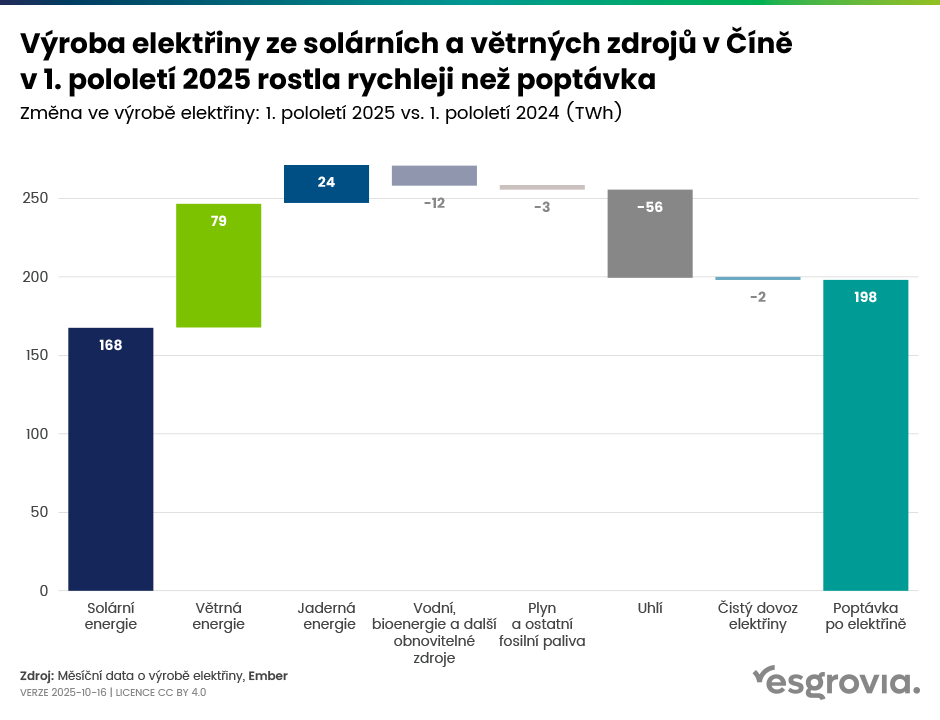
Chinese President Xi Jinping mentioned in his statement for the UN climate summit in New York a new Chinese climate commitment, which includes a goal to reduce by 2035 “net greenhouse gas emissions across the entire economy” by 7‑10% below the historical peak level.
This new commitment is exceptional — until now China had promised mainly to slow the growth of emissions or stabilize emission intensity, but not an absolute reduction. Along with this, other accompanying targets were announced:
- Increasing the share of non‑fossil fuels in energy consumption to over 30%
- Expanding installed wind and solar capacity to six times the 2020 level, targeting up to ~3,600 GW.
- Expanding emissions trading (ETS) to more industrial sectors.
- Increasing the share of afforestation and climate‑change adaptation.
The goal is to be “economically all‑encompassing”, i.e., covering all sectors and types of greenhouse gases, not just CO₂:
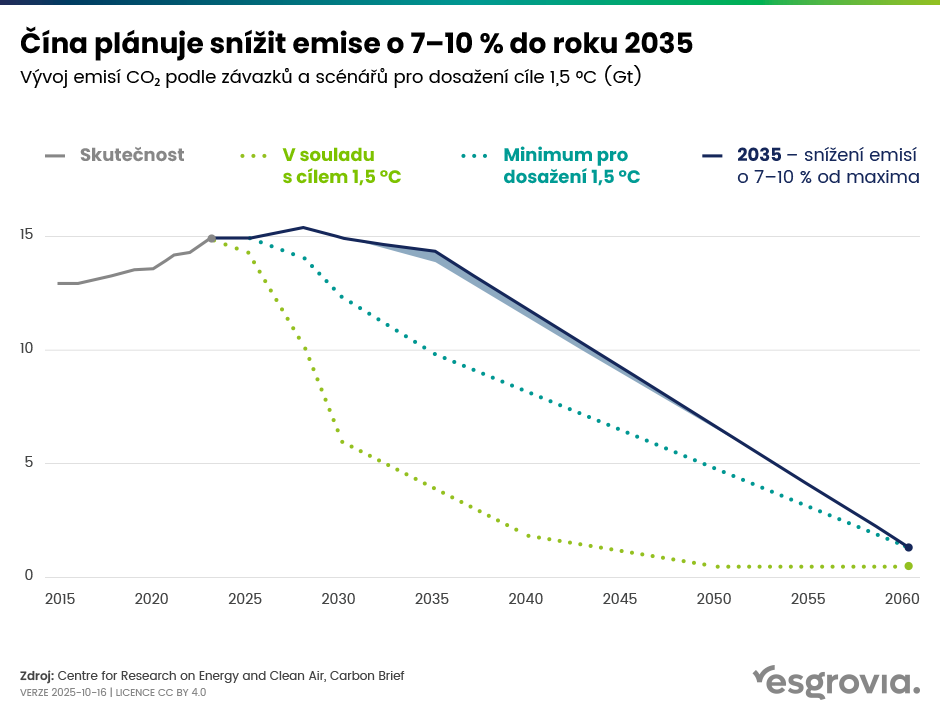
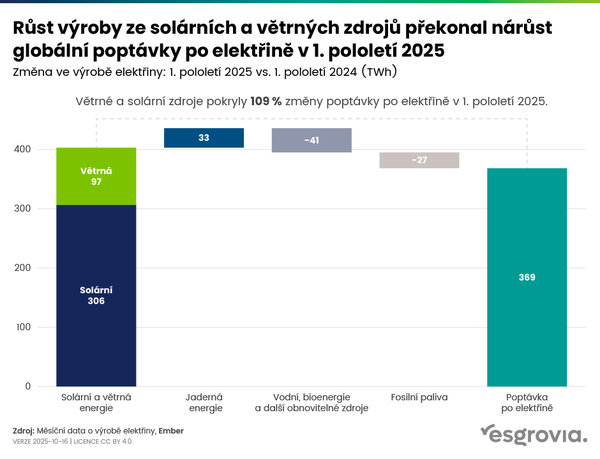
Although China continues to build coal power plants, for which it is loudly criticized, it has increased solar and wind installations more than the rest of the world combined. Thus the growth of renewables has outpaced the growth in electricity demand, and fossil‑fuel generation has fallen by 2%.
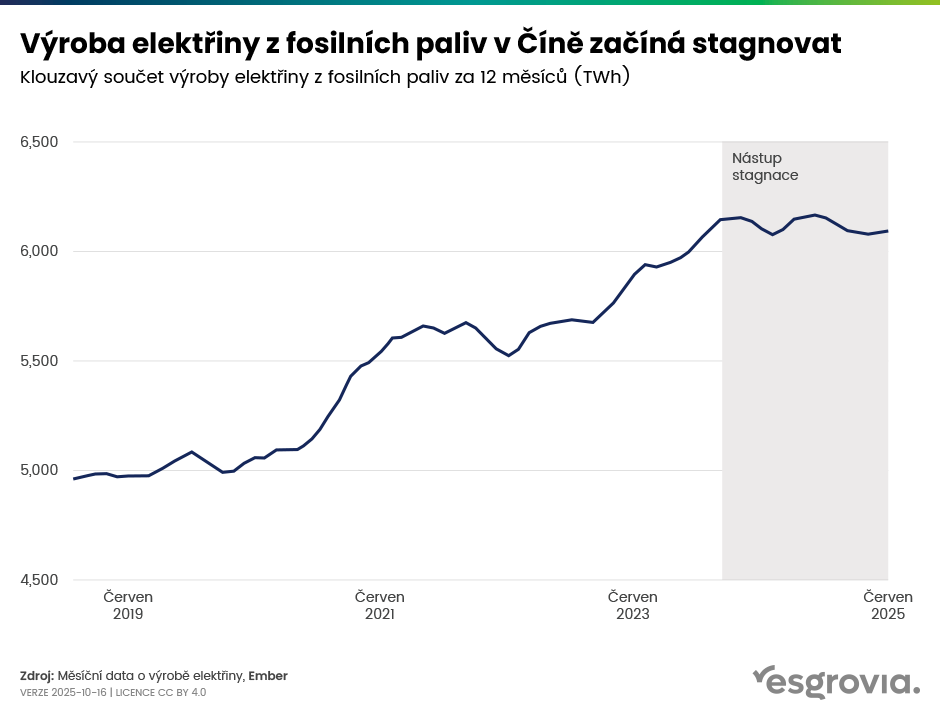
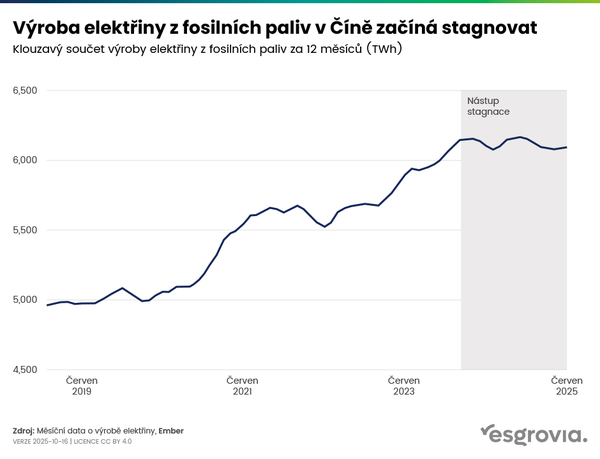
At the same time, it appears that the volume of China's CO2 emissions has begun to stagnate over the past few quarters, which may contribute to the decision to make such an emissions‑reduction commitment:
Source: SciAm, 2025; CarbonBrief, 2025
This is the first instance in which China explicitly states an absolute emissions reduction rather than merely an improvement in intensity or slower growth. The statement also suggests that China is shifting from the current model, which focused on controlling energy consumption and energy intensity, to a model that will target emissions directly.
On the other hand, the goal pertains to “peaked” emissions, but it is unclear when the peak is expected to occur and what its level will be. Experts also point out that a 7–10 % reduction is very conservative compared with what global agreements and scientific scenarios require to limit warming to 1.5 °C.
Achieving this target will require strong regulations, investment in renewable energy, industrial transition, an emissions monitoring system, the creation of control mechanisms and emissions trading, i.e., trends similar to those we know from the EU.
Related articles
Renewable sources overtook coal as the world's leading source of electricity for the first time
Priorities of China's new five-year plan
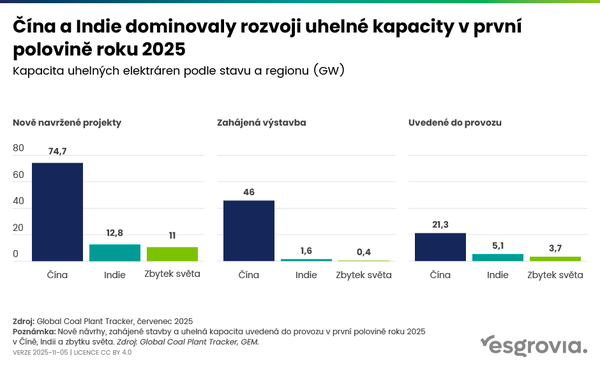
China and India account for 87% of new coal capacity in the first half of 2025