The Czech steel industry remains in crisis
According to data from the steel union, the Czech Republic produced only 2.4 million tonnes of crude steel in 2025 — historically one of the lowest figures ever. Over the past 10 years, production has fallen by more than 50%.
What lies behind it: low demand and weak consumption — 5.5 million tonnes is the second worst result since the 2009 financial crisis. High energy prices and volatile emission allowance prices. Pressure from cheap imports from third countries — the steel foreign trade deficit exceeded 4 million tonnes.
The modest improvement in finished‑goods production was almost entirely due to the restart of the New Huta in Ostrava.
Global steel production fell last year by 2% to 1.8 billion tonnes. China maintains a 53% share (down 4%). India, on the other hand, is growing — it surpassed 165 million tonnes (+10%) and almost doubled its production over a decade. In the EU production dropped by 2.6%, and Germany saw a decline of 8.6%.
Steel is a pillar of industry, construction and automotive. Its crisis permeates the entire supply chain — and it is also why companies in this sector are increasingly addressing their carbon footprint, cost efficiency and ESG reporting.
Related articles
How are Scandinavian companies preparing for the impacts of CBAM?
The green cement market will grow to $82.3 bn by 2032
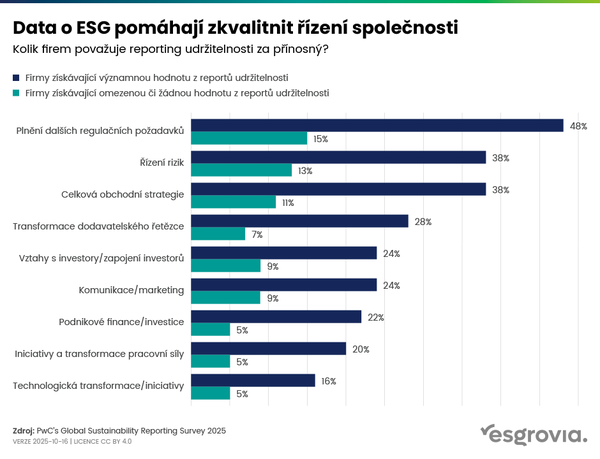
Data on ESG help improve company management