India is experiencing a steel boom, but with a high climate price tag
India is experiencing a steel boom — but its climate cost is enormous.
Steel accounts for 7–8% of global CO₂ emissions, in India even ~12% of national emissions. Indian steel is also significantly “dirtier”:
- world average: 1.9 t CO₂ / t steel
- India: 2.5–2.6 t CO₂ / t (≈ +30%)
Reason? Almost 90% of capacity runs on coal and a large part of production comes from small, inefficient steelworks. Coal is also about 8× cheaper than gas, so companies have no economic incentive to switch to cleaner technologies.

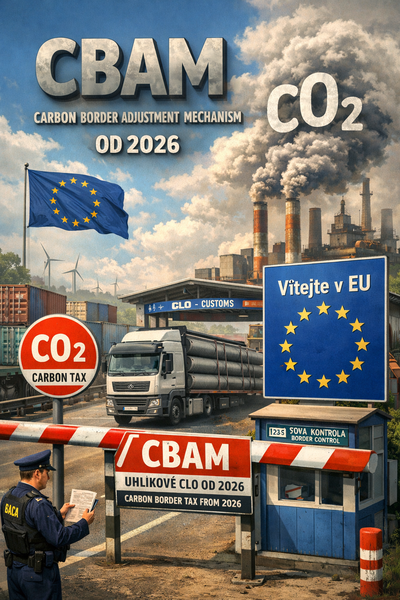
This is also a problem for the EU: more than a third of Indian steel exports go to Europe. And because CBAM takes the actual emission footprint into account, Indian steel will be among the most heavily taxed imports (higher rates than, for example, China).
Thus CBAM will function as a carbon tax on cheap but highly emitting Indian steel.
India protests that it is a trade barrier — the EU counters that it is a necessary step against “carbon leakage”.
Large producers like JSW and Tata are testing pilots with renewable energy or green hydrogen, but the technology is expensive, gas is unavailable, and customers in India are not willing to pay a premium for green steel.
https://www.ft.com/content/c9f4b3af-b72e-4402-a678-77df4b7fa0a7
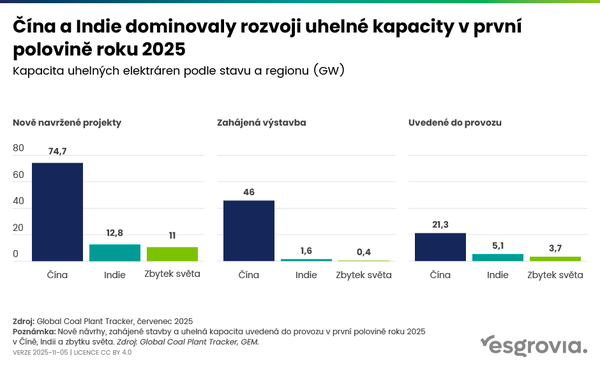
High demand for steel in India is one of the reasons for the rise in coal‑fired power plant construction. A coal peak in India is not expected until around 2040, for example.
CBAM theoretically changes the rules of the game — it disadvantages dirty production and rewards low‑emission output.
European companies should therefore be protected from “carbon dumping”, where cheap, high‑emission steel is imported into the EU without any carbon price.
For India, on the other hand, it represents a potential threat — if it does not move faster to cleaner steel, it could face a loss of competitiveness and stranded assets worth hundreds of billions of dollars.
Related articles
China and India account for 87% of new coal capacity in the first half of 2025
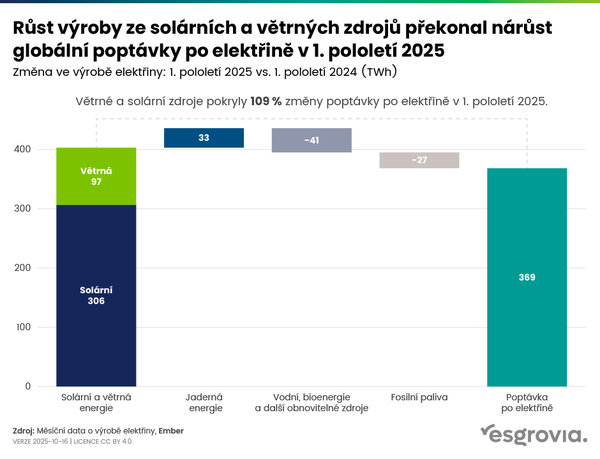
Renewable sources overtook coal as the world's leading source of electricity for the first time
Carbon tax (CBAM) as a test of the EU's negotiating power