Sustainability reporting – EU back and China forward
While the European Union is loosening its sustainability reporting rules, China is gradually introducing them.
The Chinese Ministry of Finance together with other governmental and regulatory bodies has issued “Standard for Disclosure of Business Sustainability Information No. 1 – Climate (pilot version)”, which, after practical testing, is to be gradually introduced as mandatory climate information disclosure by Chinese companies.
IFRS Inspiration
The newly issued climate information reporting rules are primarily based on IFRS standards (S1 and S2) focused on disclosing climate-related and sustainability-linked financial information. According to the Chinese Ministry of Finance, the published standards take Chinese regulations into account and respect local specifics, while also drawing on positive international experience. The published standard mainly sets general and common requirements, but China has already begun preparing specific and implementation regulations for individual sectors such as energy, steel, coal, oil, fertilizers, or the automotive industry, and will gradually add guidance in other ESG areas as well.
Alongside the nationwide rollout of the standards, some stock exchanges, such as those in Beijing or Shanghai, have also introduced their mandatory guidelines for sustainability reporting, where selected obligated issuers must publish their sustainability report as early as 2025.
Taxonomy in Chinese
In 2025, China newly declared support for the green transformation of its economy and also embarked on financial backing of sustainable investments. Since autumn 2025, the “Catalogue of Approved Projects for Green Finance” issued by the People’s Bank of China has been in force, serving as a unified national taxonomy for sustainable financial products.
Sources: Ministry of Finance of the People´s Republic of China, 2025a, 2025b; China Briefing, 2026.
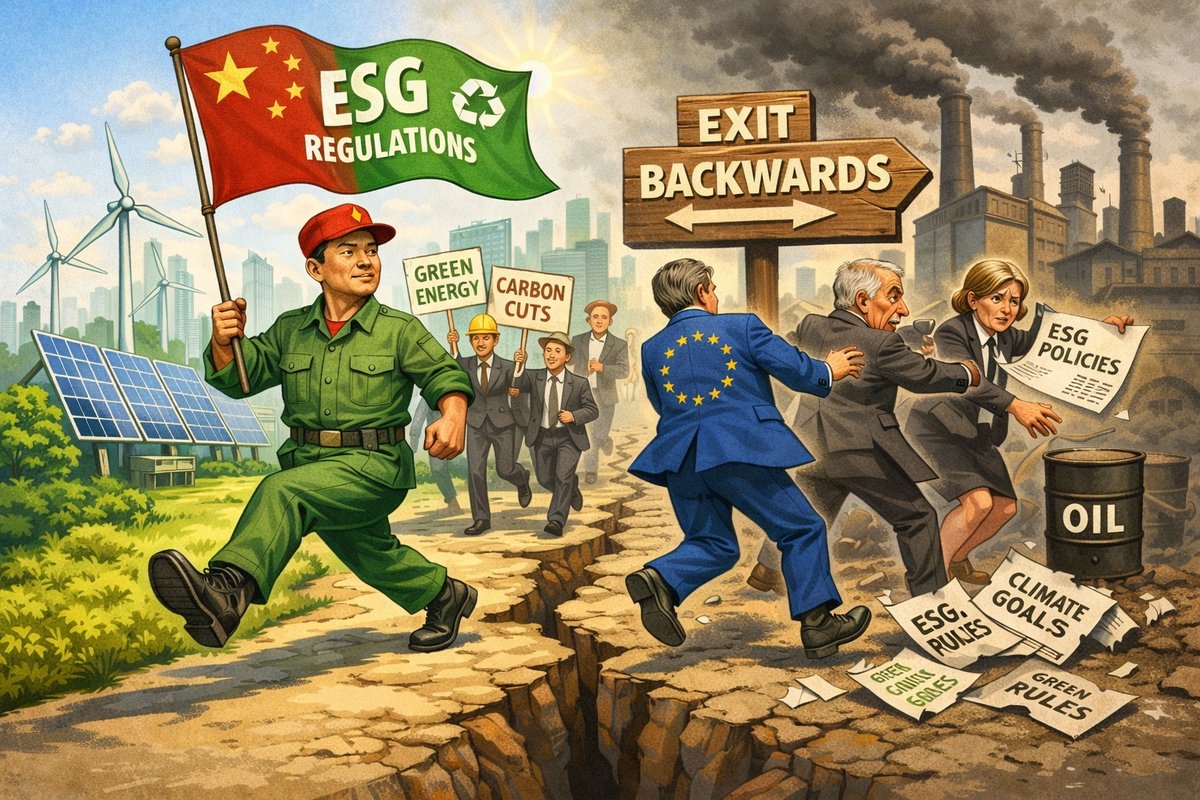
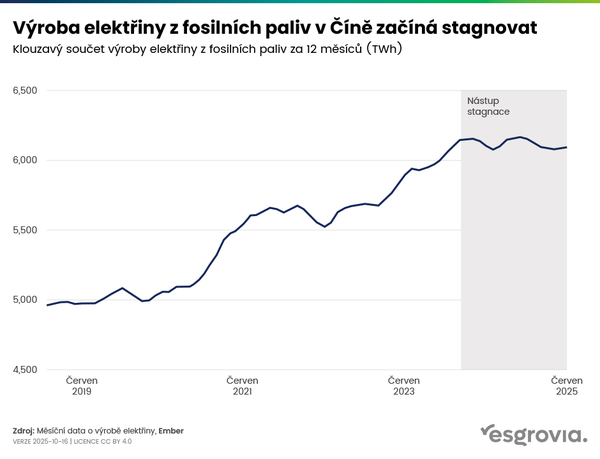
Where the member states of the European Union see a barrier, China sees an opportunity. The year 2025 brought a series of gradual, successive steps in China leading to the support of sustainability. The accelerator was certainly the EU's effort to steer the European economy onto a sustainable path, including the introduction of the ETS and CBAM, but while the EU has taken a step back, it seems that China is placing the green transformation at the forefront of its development.
Related articles
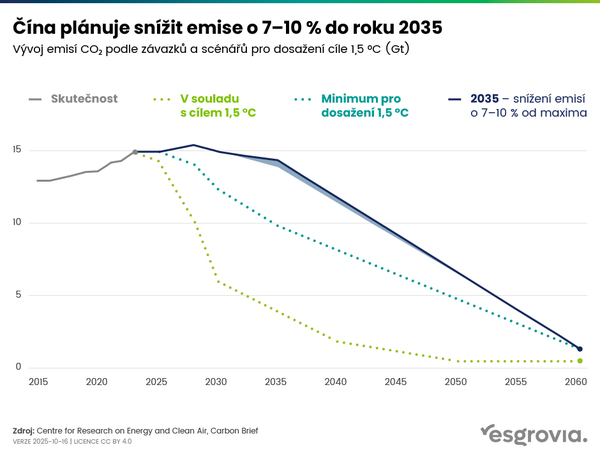
China plans to reduce emissions by 7–10% by 2035
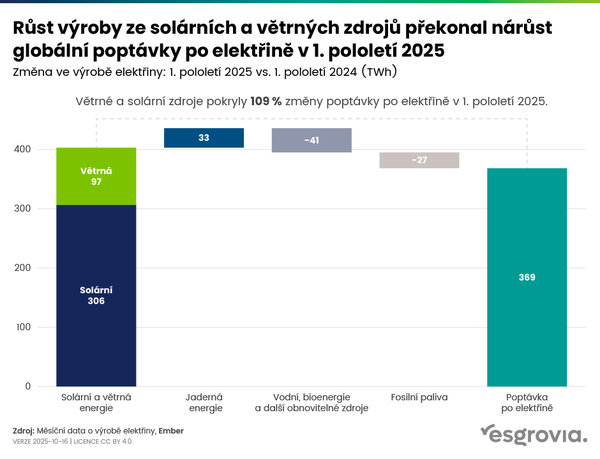
Renewable sources overtook coal as the world's leading source of electricity for the first time
Priorities of China's new five-year plan